
Antipasti - Appetizers
The perfect way to start your dinner or serve with your Aperitivo.
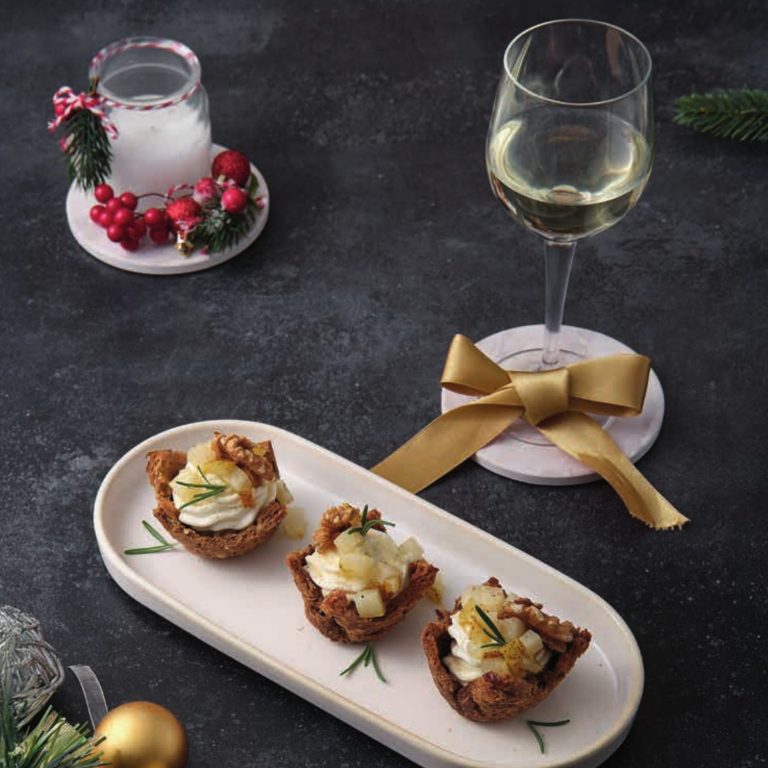
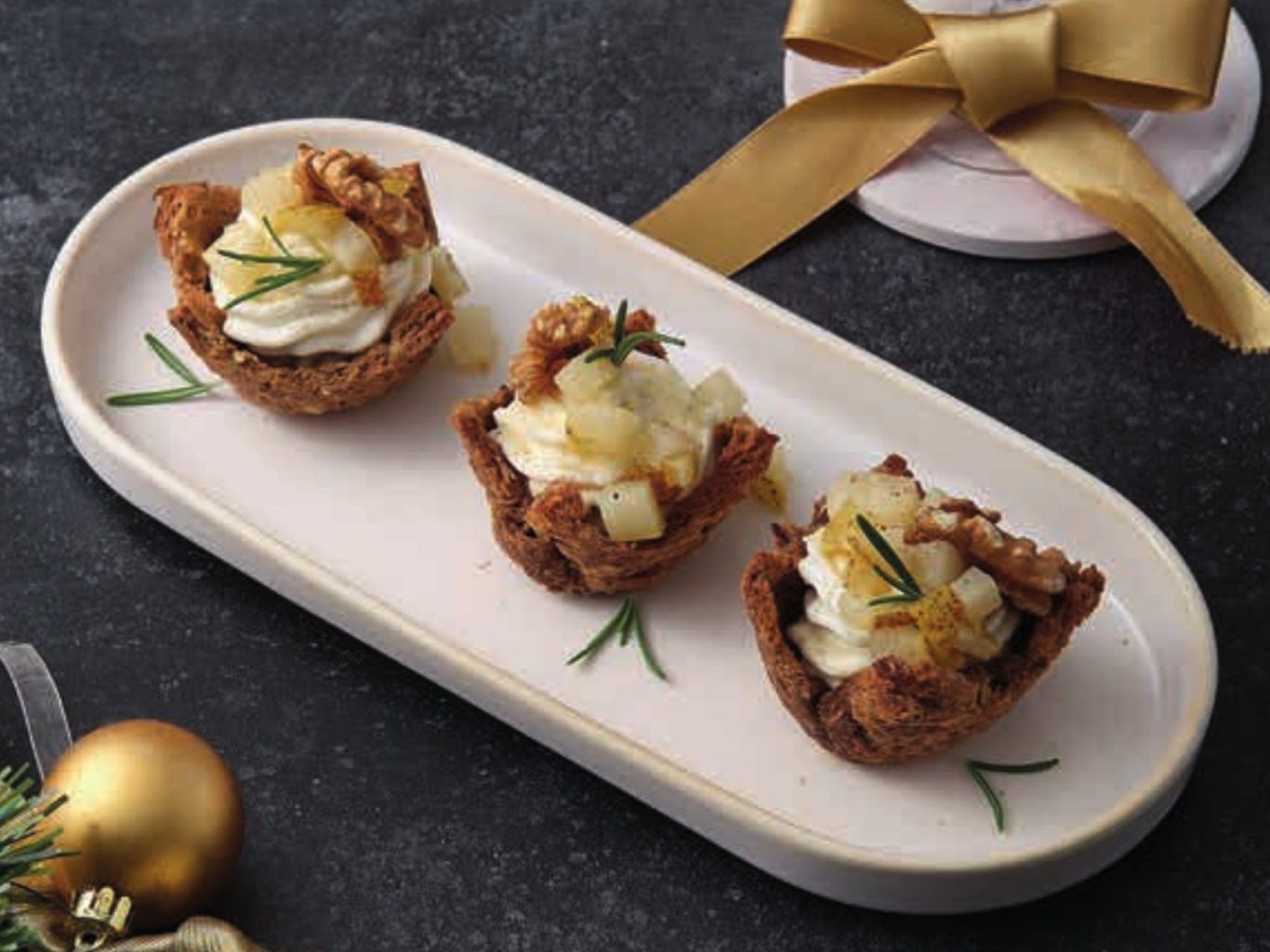
Cheese bread baskets
Cestini di pane al formaggio
FOR 4/6 PEOPLE - EASY - 40 MINUTES PREP TIME
VARIATION: SUBSITUTE THE 50G OF GORGONZOLA FOR YOUR FAVOURITE STRONG FLAVOURED CHEESE
Ingredients:
12 slices of whole wheat bread without crust.
150 g of ricotta.
200 g of mascarpone
50 g of gorgonzola (to taste)
1 ripe pear.
2 walnuts.
Honey to taste
A few sprigs of rosemary.
1 organic lemon
Extra virgin olive oil • salt and pepper
Instructions
First, prepare the baskets: flatten the bread slices with a rolling pin and cut them to size using your cookie cutters. Then, using your fingers, press the bread firmly into the mold and brush it with oil. Bake at 170°C (340°F) for 10 minutes, or until well toasted. Remember: let the baskets cool without removing them from the molds.
Prepare the filling: using an electric mixer, whip the cheeses and season with the whelk, a few drops of lemon juice, chopped rosemary needles, and a sprinkling of pepper. Wash and peel the pears, then dice them and sauté them in a pan with a drizzle of oil, salt, pepper, and a sprinkle of sugar. If desired, deglaze with a small amount of rum.
Assemble: Use a piping bag to pipe the cream into the baskets and garnish with a spoonful of pears, a walnut kernel, a drizzle of honey, and the rosemary. I recommend filling your bread baskets just before serving.
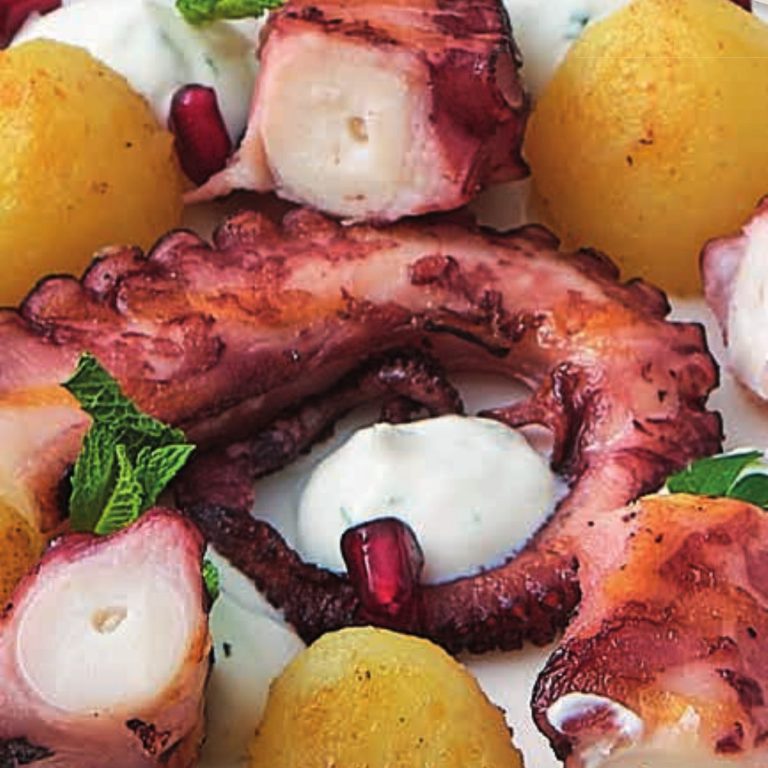
Octopus and potato salad
with herb yogurt and pomegranate.
Insalata di polpo e patate con yogurt alle erbe e melagrana.
FOR 4 PEOPLE - DIFFICULT - 60 MINUTES PREP TIME
VARIATION: SUBSITUTE THE OCTOPUS WITH YOUR FAVORITE FISH
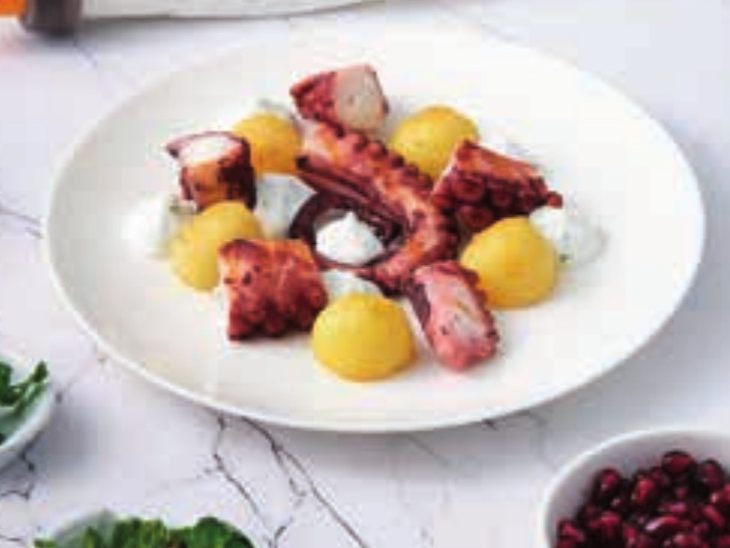
Ingredients:
• 500 g cleaned octopus tentacles
• 500 g firm potatoes, preferably small
• 1 clove garlic
• Half a pomegranate
• 2 tablespoons extra virgin olive oil
• Ground black pepper to taste
• 200 g Greek yogurt
• 1 tablespoon chopped fresh parsley
• 1 tablespoon chopped fresh mint
• Salt and pepper to taste
Instructions
Prepare the octopus and potatoes. Bring a large pot of lightly
salted water to a boil. Dip the octopus tentacles in the water 2-3 times, holding them by the head, to curl them.
Then immerse them completely and cook over medium heat for about 30
40 minutes, until a fork can easily be inserted. Let them cool in the cooking water.
Scrub the potatoes thoroughly and cut them into uniform-sized wedges.
You can also leave the skin on if you prefer. In a heavy-bottomed pan, brown the potatoes
with an unpeeled garlic clove. Then add a splash of water, a pinch of
salt, and cover. Cook until soft. Season with salt.
Prepare the herb yogurt. In a large bowl, combine the Greek yogurt with a drizzle
of extra virgin olive oil, finely chopped parsley, and mint. Season with salt and pepper
and mix until smooth and fragrant. Pour into a piping bag
or a bowl and let it rest in the refrigerator for 10-15 minutes, to allow the
flavors to blend. Meanwhile, carefully separate the pomegranate seeds, collecting
the seeds in a small bowl.
Grill the octopus and assemble the salad. Drain the octopus. Heat a cast iron grill
until it is very hot, then add the tentacles and grill them over high heat
for 2-3 minutes per side, adding a drizzle of oil, to obtain a light
browning and a smoky aroma. Then cut the tentacles into 2 cm pieces.
Plating and serving. Arrange the potatoes on a serving platter, add the grilled tentacle pieces and the herb yogurt, using a piping bag or a spoon.
Finish with the pomegranate seeds and a few fresh mint leaves.
Serve warm or at room temperature.
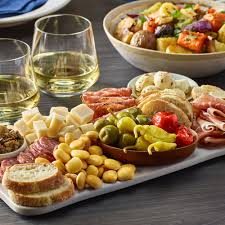
Tuscan Antipasto Platter
Piatto di antipasti
VARIATION:
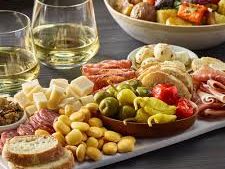
Suggestions for your platter:
A traditional Tuscan antipasto platter features a variety of cured meats, local cheeses, crostini, and marinated vegetables, emphasizing the rustic, local flavors of the region.
Cured Meats (Salumi)
Offer a variety of textures and flavors, from delicate to robust.
- Prosciutto Toscano: A saltier, more heavily spiced version of cured ham compared to those from Northern Italy, often rubbed with garlic and pepper.
- Finocchiona: A signature Tuscan salami flavored distinctively with wild fennel seeds (finocchio). The very fresh, crumbly version is known as sbriciolona.
- Salame Toscano: A classic regional salami with variations in grind and spicing across different towns.
- Capocollo (Coppa): Cured pork shoulder butt, prepared with salt, herbs, and spices.
- Lardo di Colonnata: Seasoned and aged lard, a delicacy often served thinly sliced on warm crostini.
- Salsiccia di Cinghiale: A cured sausage made from wild boar, a common meat in Tuscan cuisine.
Cheeses (Formaggi)
Feature a mix of fresh and aged, with sheep's milk cheese (pecorino) being the star of Tuscany.
- Pecorino Toscano: This essential sheep's milk cheese is available in different ages, from mild and fresh (fresco) to firm and sharp (stagionato). Drizzle aged versions with a little balsamic glaze or serve with honey or fig jam.
- Caciotta Toscana: A mild, semi-soft cheese, often made with a mix of sheep and cow's milk.
- Fresh Mozzarella (Bocconcini): Small fresh mozzarella balls, often marinated in olive oil, fresh herbs (basil, rosemary), and red pepper flakes.
- Parmigiano-Reggiano: While not exclusively Tuscan, chunks of this hard, nutty cheese are a common and popular addition.
Crostini & Bread
Bread is a foundation of the Tuscan table, especially the local, often saltless, crusty bread.
- Crostini ai Fegatini (Chicken Liver Pâté): The most traditional Tuscan crostini, featuring a rich chicken liver pâté spread on toasted bread.
- Crostini alle Olive Nere (Black Olive Pâté): Simple toasted bread topped with a black olive spread (tapenade).
- Bruschetta al Pomodoro: Toasted bread rubbed with garlic and topped with fresh, diced tomatoes, basil, and olive oil.
- Cannellini Bean Crostini: Mashed white beans mixed with garlic, rosemary, and olive oil, served on toast.
- Schiacciata: A crispy, oily Tuscan flatbread, excellent on its own or for making sandwiches with the other ingredients.
- Crusty Bread/Ciabatta: Sliced or torn pieces of rustic Italian bread for general pairing.
- Grissini: Long, crunchy Italian breadsticks.
Marinated & Pickled Vegetables
These provide a tangy contrast to the rich meats and cheeses.
- Marinated Artichoke Hearts: Tender artichoke hearts packed in oil or water.
- Roasted Red Peppers: Drained and mixed with a little garlic and olive oil.
- Olives: An assortment of Italian varieties, such as Castelvetrano (green) and Kalamata (black), plain or marinated.
- Pepperoncini: Mildly spicy pickled peppers.
- Marinated Mushrooms: Whole or sliced mushrooms preserved in an herbed oil.
- Sun-dried Tomatoes: Oil-packed, rich tomatoes.
- Cannellini Bean Salad: Cooked white beans tossed with olive oil, lemon, herbs, and maybe some chopped onion.
- Grilled Zucchini and Eggplant: Sliced, grilled vegetables seasoned with olive oil, salt, and herbs.
Accompaniments & Garnishes
Small additions for pops of flavor, texture, and color.
- Fresh Fruit: Seasonal options like grapes, fresh figs, or slices of pear or apple pair well with cheese.
- Dried Fruit: Dates, prunes, or dried apricots offer a sweet, chewy contrast.
- Nuts: Toasted almonds, hazelnuts, or walnuts.
- Spreads: Fig jam, honey, or a spicy pepper spread.
- Garnish: Fresh sprigs of rosemary, basil, or parsley to add visual appeal.